
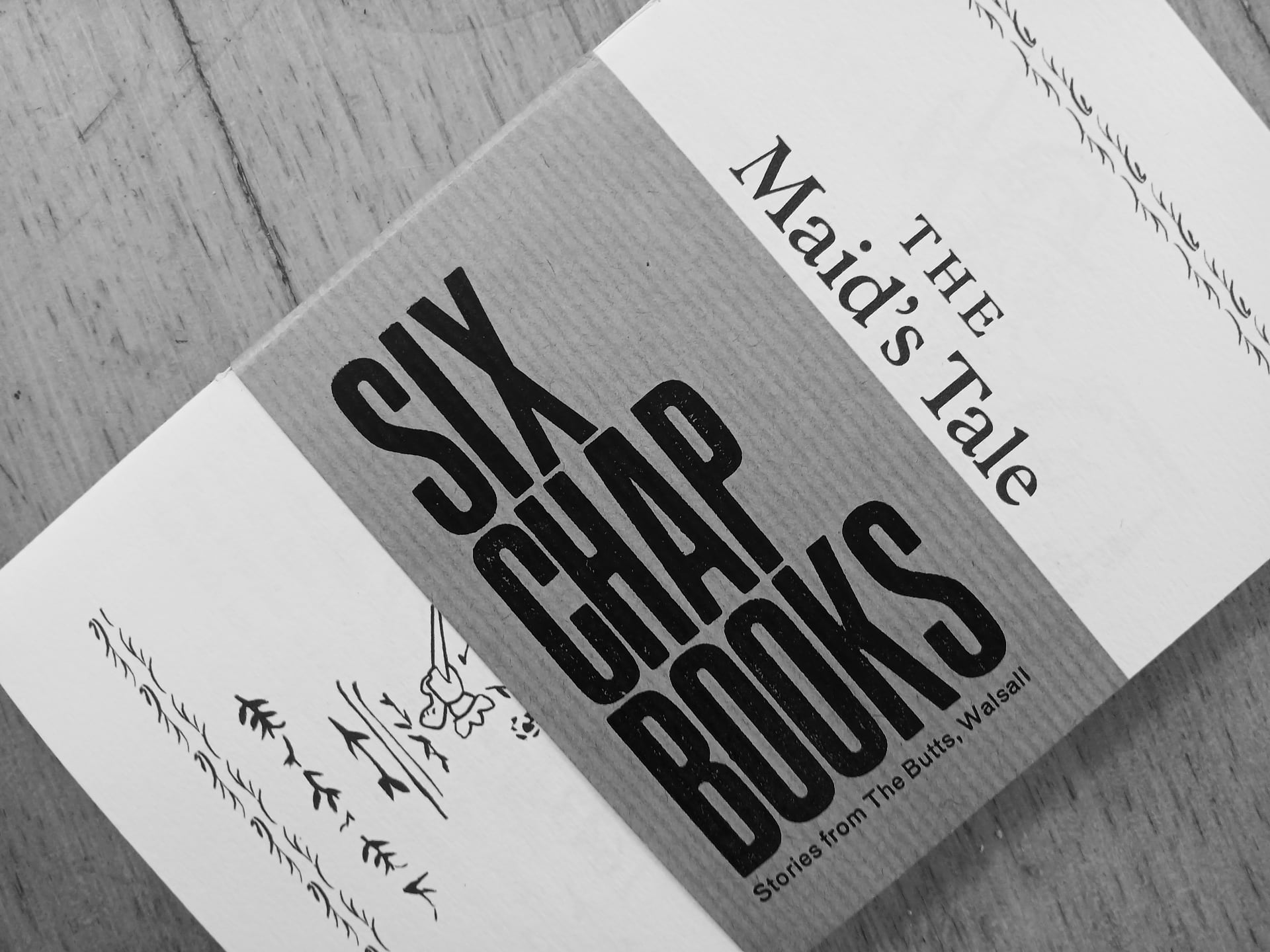
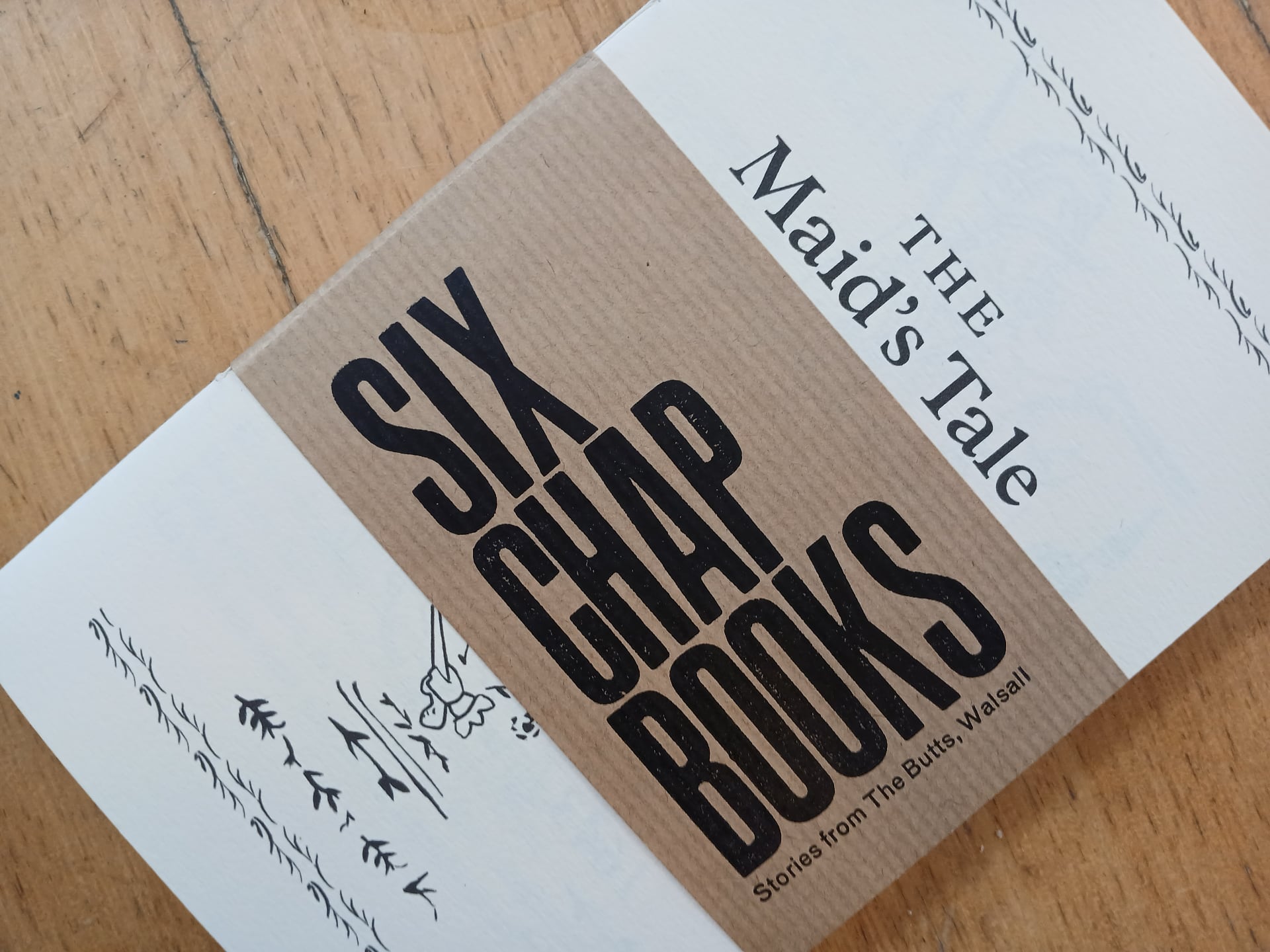
6 Chapbooks – Stories From the Butts
In May 2024, following a successful bid for funding to the National Lottery Heritage Fund, we began work on our latest major piece of work, The Butts Chapbooks Project.
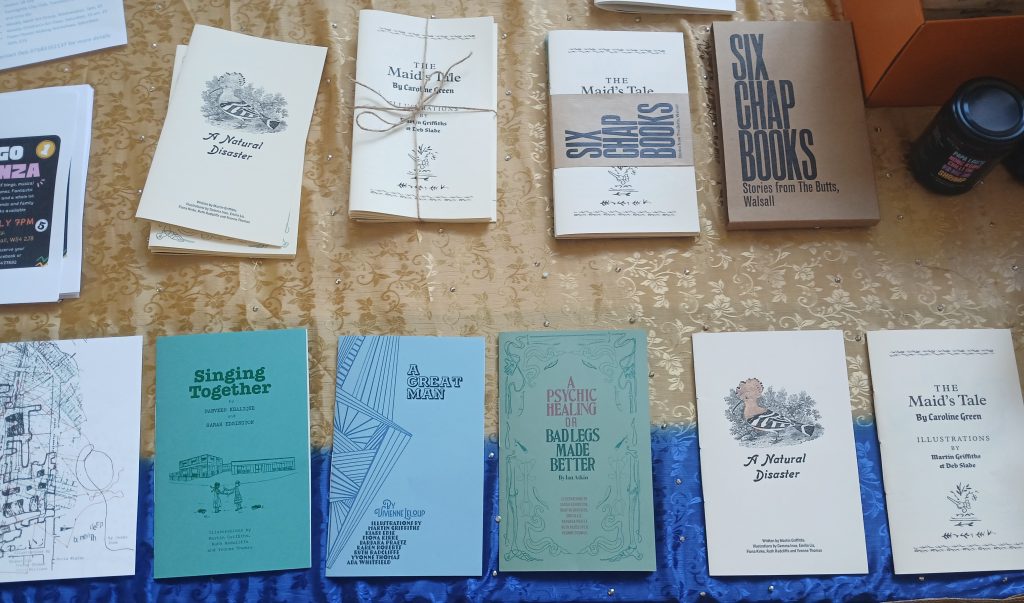
Working with members of our core and user groups, as well as other people from the Butts community, our aim was to create a series of 6 illustrated chapbooks, each chapbook containing an illustrated story drawn from the history of the area.
Each chapbook was written, illustrated, designed, and printed in house by group members working under the guidance of artists based at the Creative Factory.
What is a Chapbook?
Chapbooks first appeared in the 16th century. They were a cheap and popular form of literature, costing only a penny or less, and so could be afforded by ordinary working people, who bought them from itinerant street-sellers known as chapmen.
Chapbooks were made of one or two sheets of paper, folded in half and stitched together, and contained tales of romance, crime and adventure, popular ballads and fairy tales.
By the late 18th century, chapbooks were also being produced containing religious tracts, or sermons on moral and social issues. And by the 19th century, with the advent of cheaper printing, they were being used mainly to publish children’s stories.
Once books could be mass produced and sold more cheaply, the popularity of chapbooks declined.
Writing the Chapbooks
Four of the six stories were inspired by historical research into events and incidents from the history of the Butts carried out by Alison Maxam and Paul Myatt.
The other two, which were set in more recent times, involved the writer in carrying out face to face interviews with Butts residents. Once the stories had been selected, the writers worked under the guidance of writer David Calcutt to shape, write, and edit fictional stories inspired by those true-life events and experiences.
The stories spanned a period of 400 years – one from the 16th century, one from the 19th century, two from the early twentieth century, and two from the late twentieth century. All except for one are written in the voice of the main character, which gives the stories a close-up and personal feel, and helps us identify with the action of the story, no matter how remote in time it may be. The aim all along was to write stories that had immediate appeal, and brought to life a moment in time from the long and varied history of the Butts.
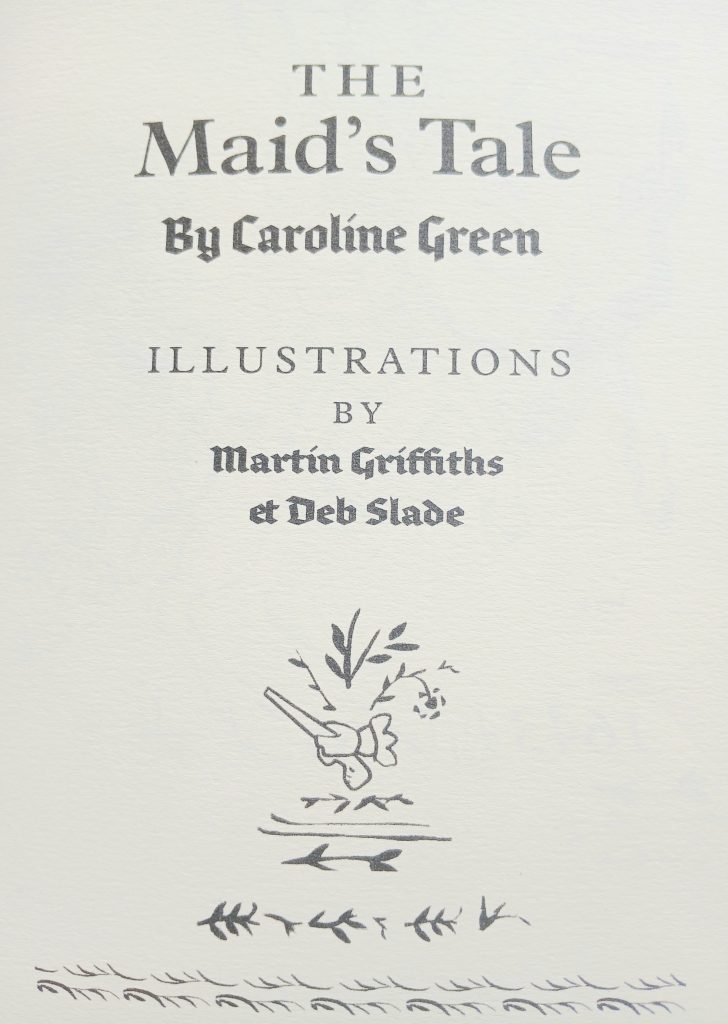
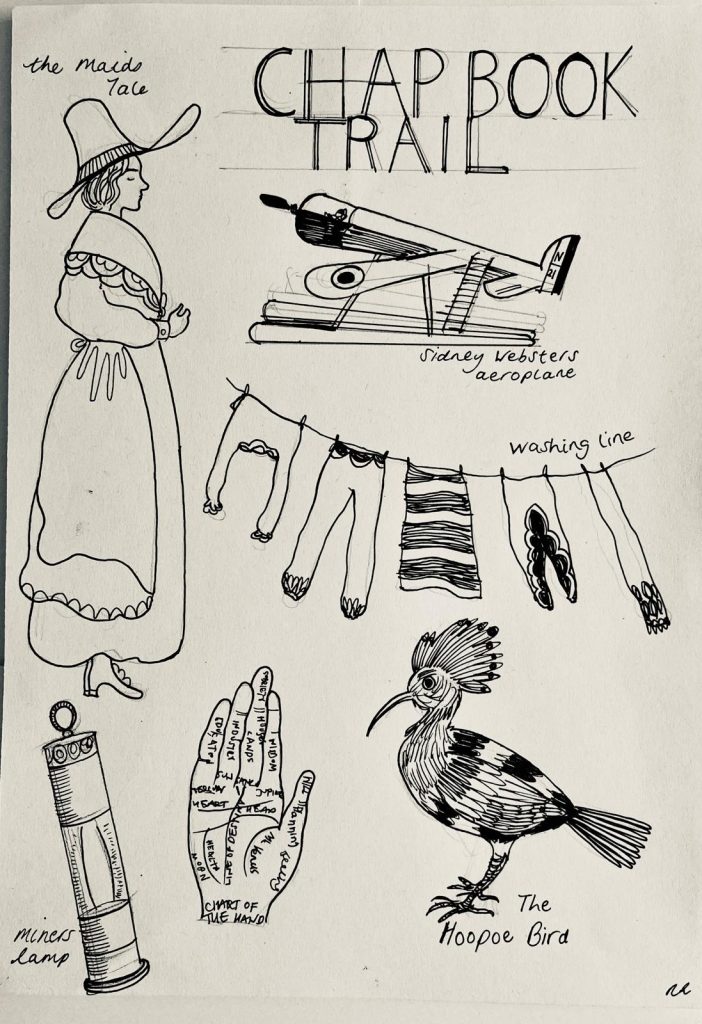
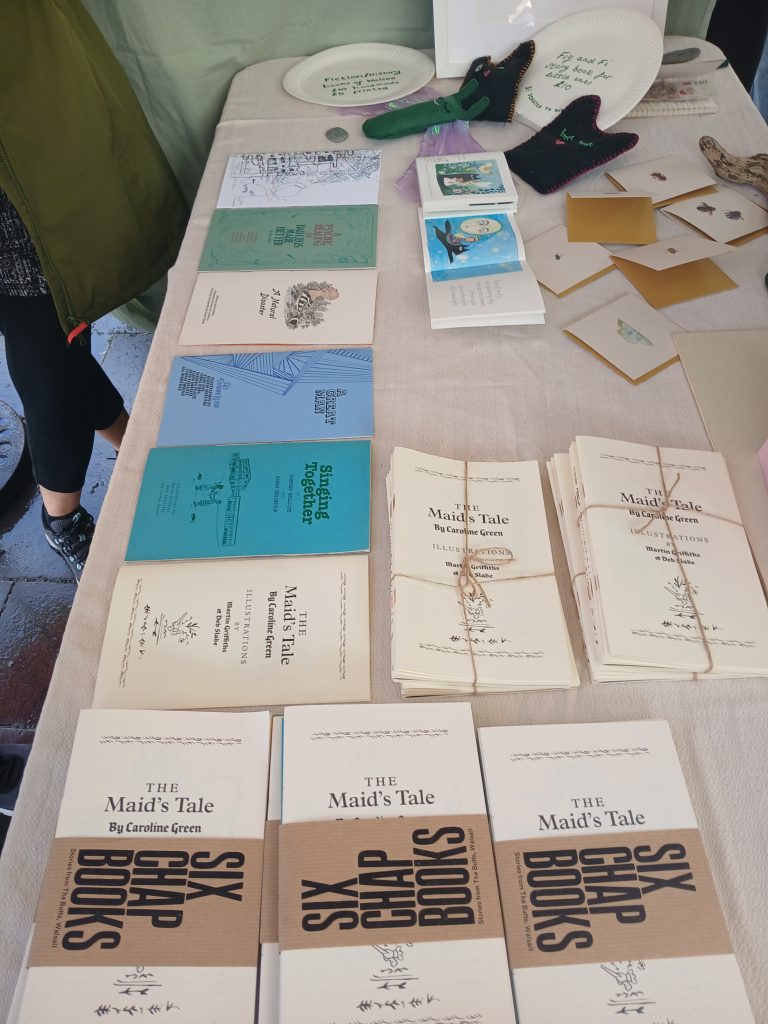
Story 1: The Maid’s Tale, by Caroline Green
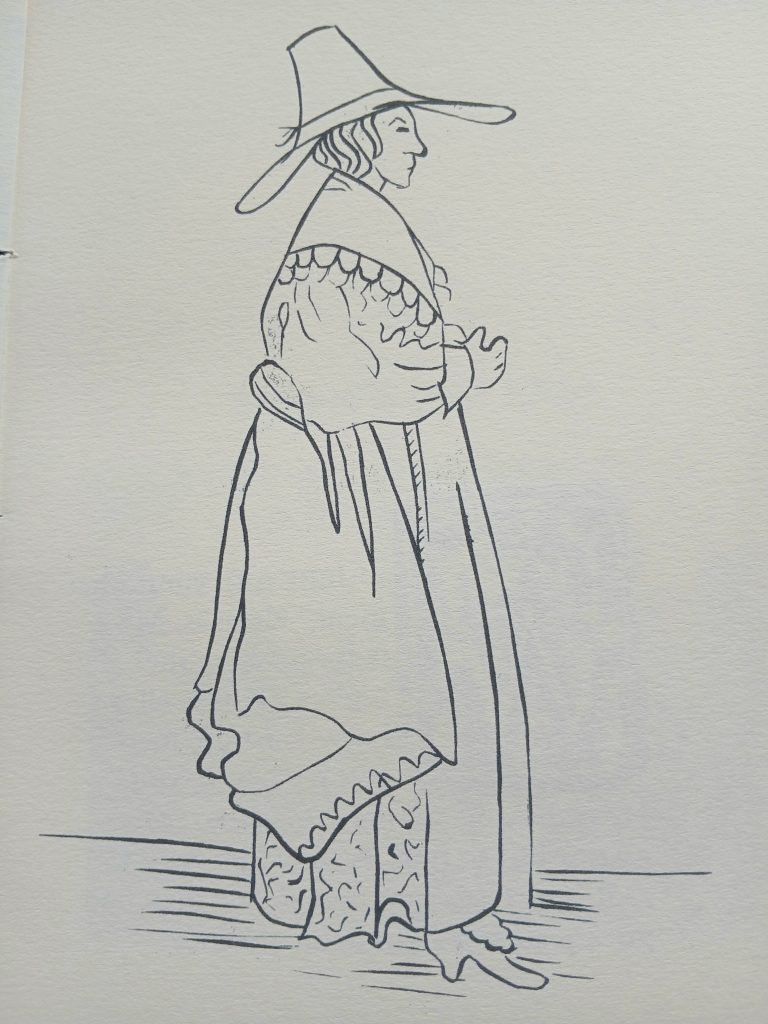
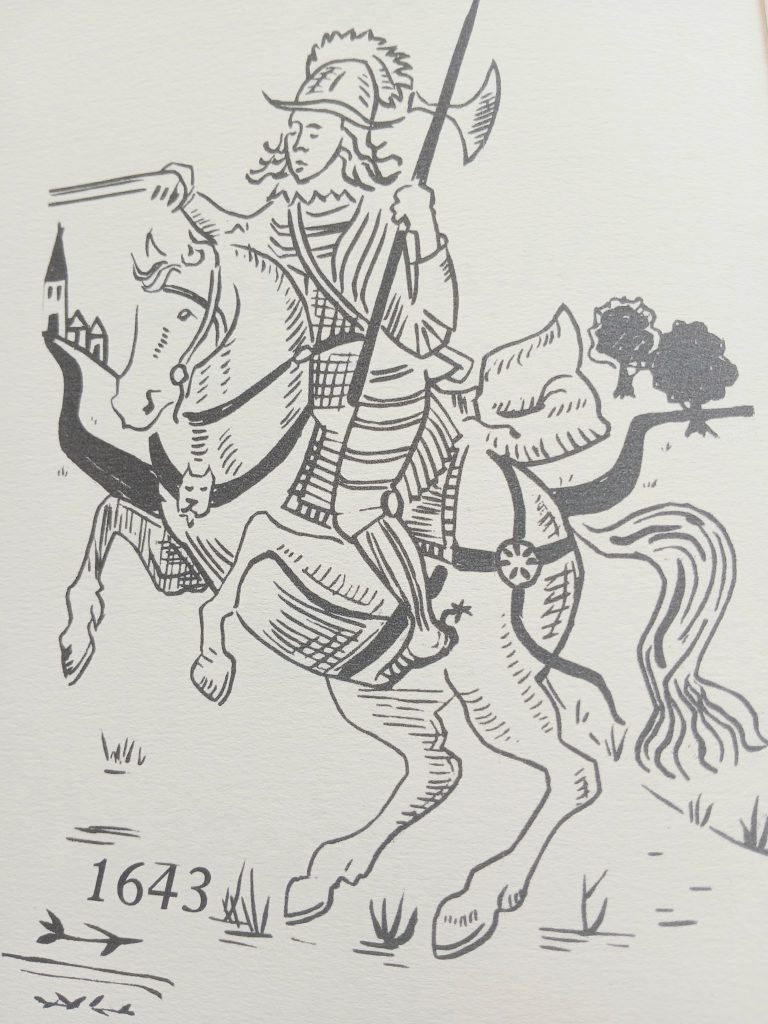
Prince Rupert’s royalist army are attacking the Parliamentary stronghold of Rushall Manor. Lord of the Manor, Major Leigh, is away fighting elsewhere, leaving only his wife to defend their ancestral home.
But Lady Leigh is not going to give up without a fight, and calls on her men- and maidservants to help. Based on the real event of the 1643 siege of Rushall Manor House during the Civil War, in Caroline’s story one of those maids tells the tale of how she took up arms to defend her lady’s honour – and her own.
Story 2: A Natural Disaster, by Martin Griffiths
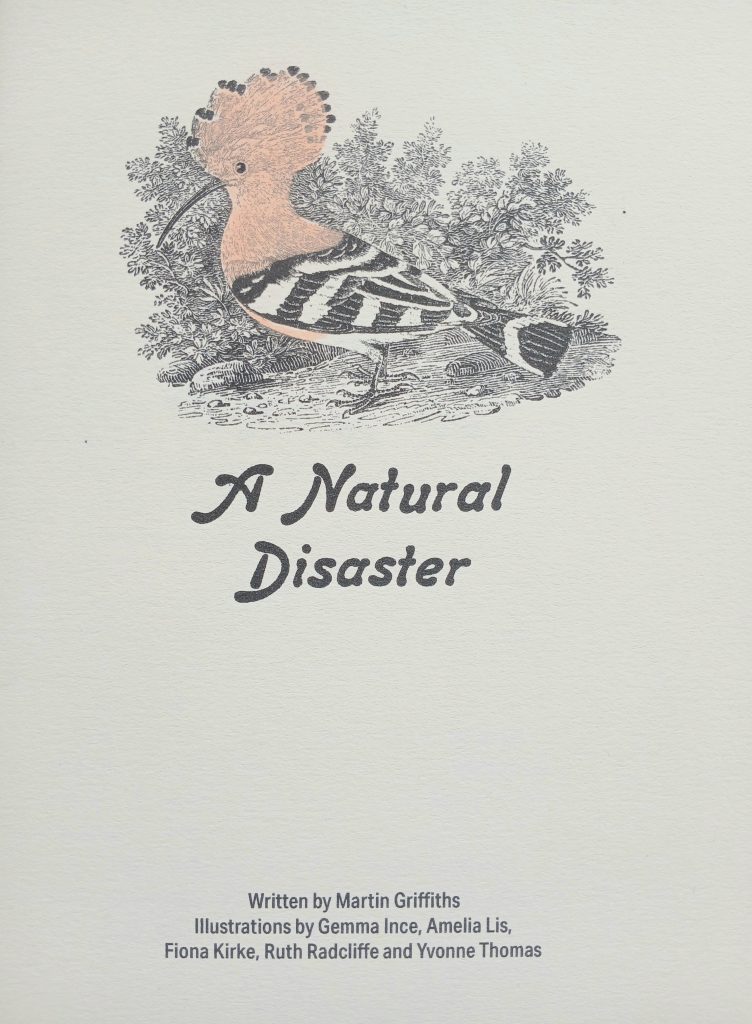
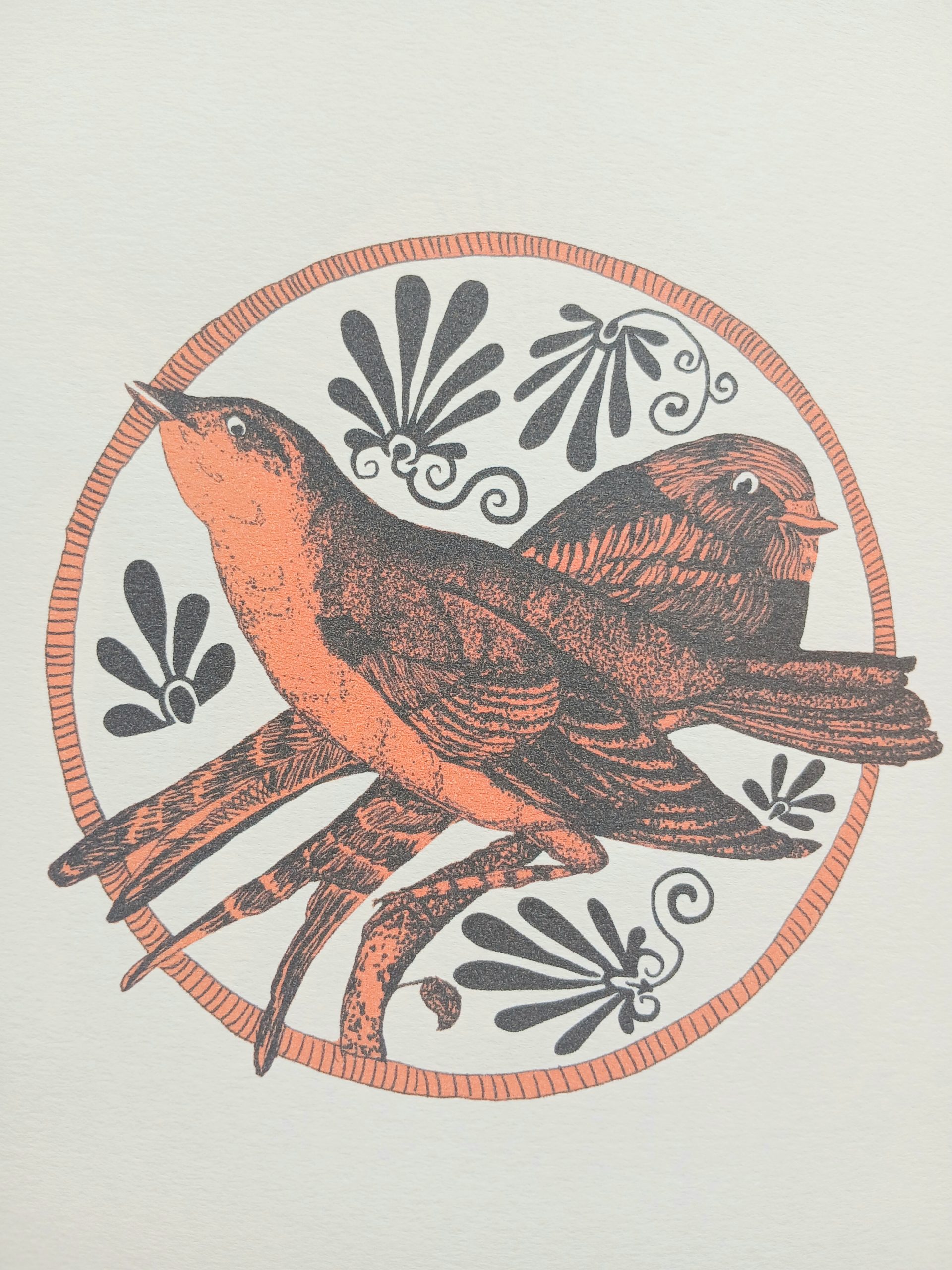
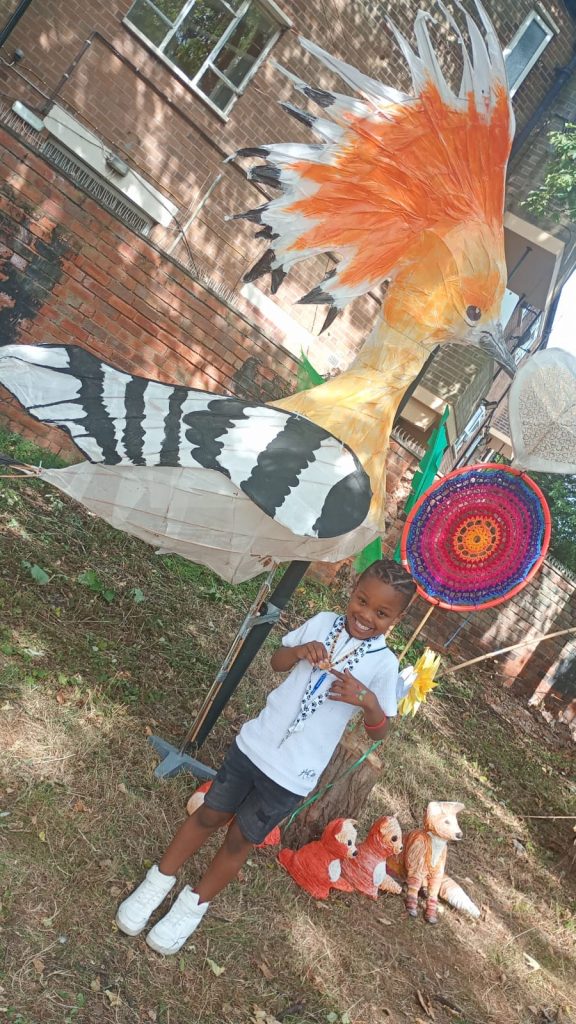
Outside the Dusty Miller pub, two Butts men discuss the sighting of a rare hoopoe bird at the colliery where one of them works. A vicar hears a nightingale at the wrong time of day.
The nightingale and her sister the swallow plot their revenge for a grievous wrong. All culminates in the 1872 Pelsall Hall Colliery disaster and the shooting of the hoopoe. Martin’s story combines history, folklore and ancient myth in a tale with a tragic twist.
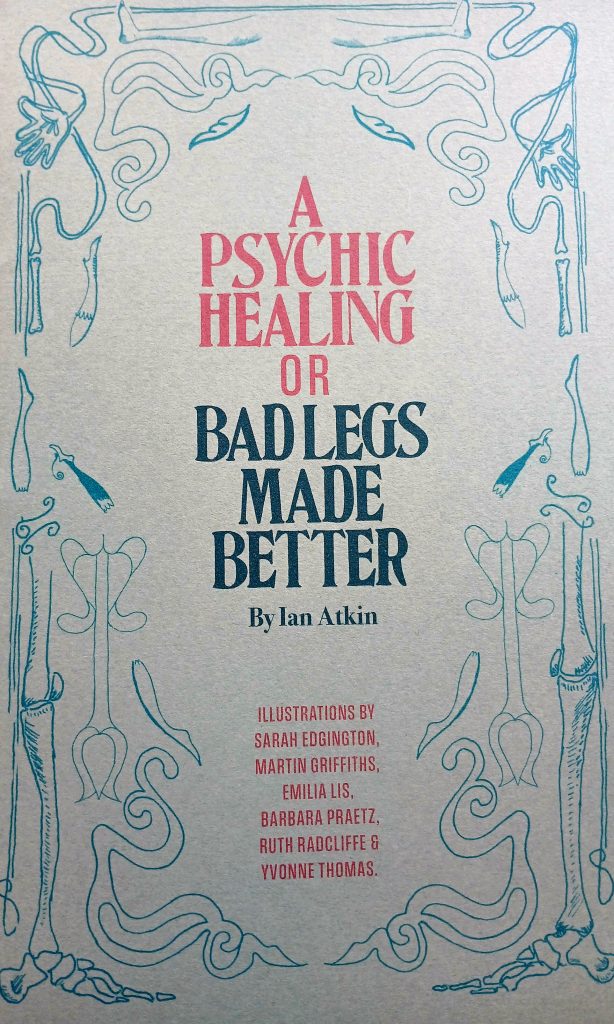
Story 3: A Psychic Healing, or, Bad Legs Made Better, by Ian Atkin
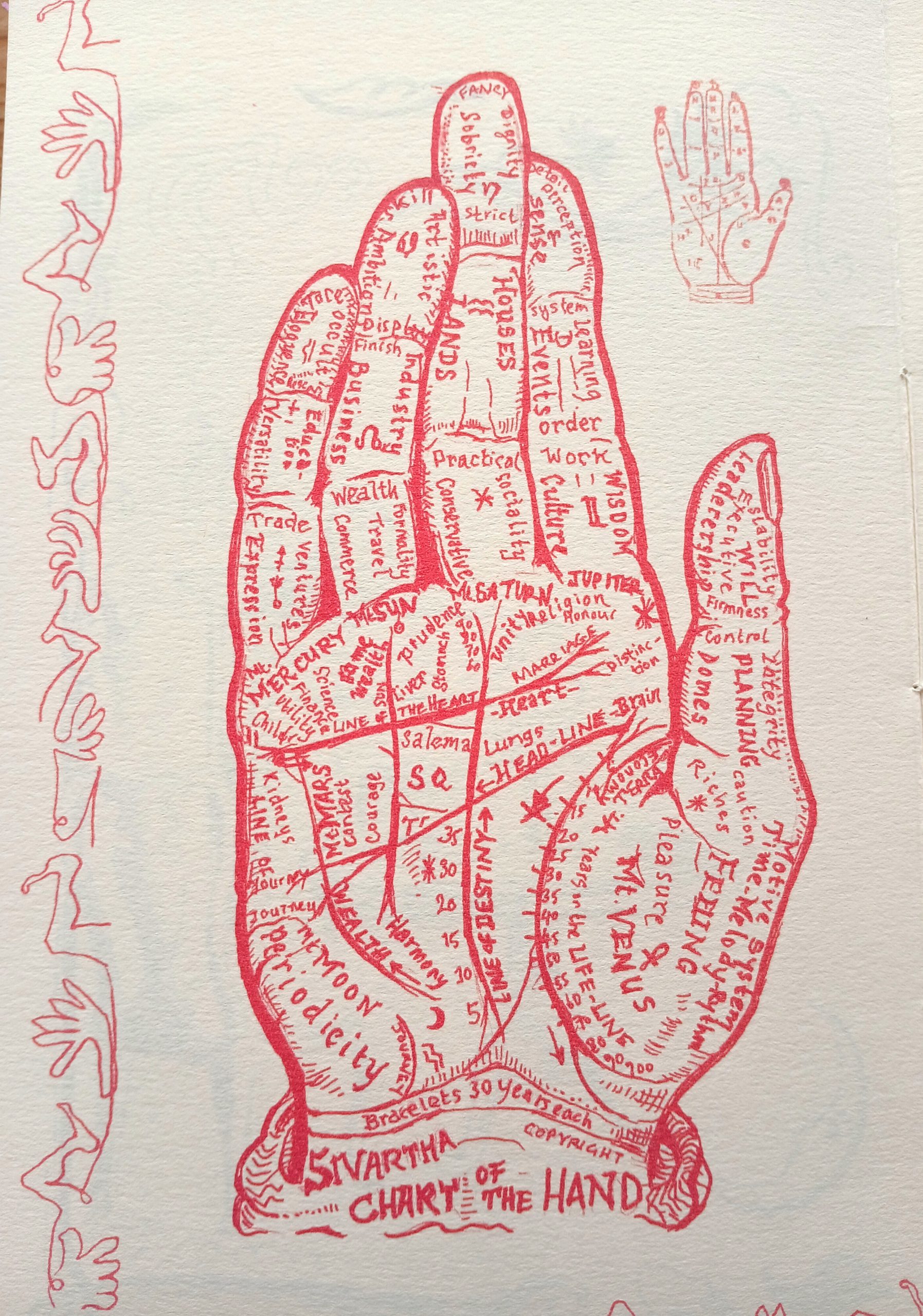
Our hero has a bad leg, and can’t afford to pay for a doctor. What better place to turn to, but the Pardoes, of Borneo Street, whose powers of psychic healing are attested to by the most eminent “barristers, doctors, clergy and countesses”.
What could possibly go wrong. Ian’s story is based on a series of advertisements in a Walsall newspaper at the turn of the 19th century, and recounts the experiences of one man as he steps into the world of spirits – and limps out again.
Story 4: A Great Man, by Viv Leloup
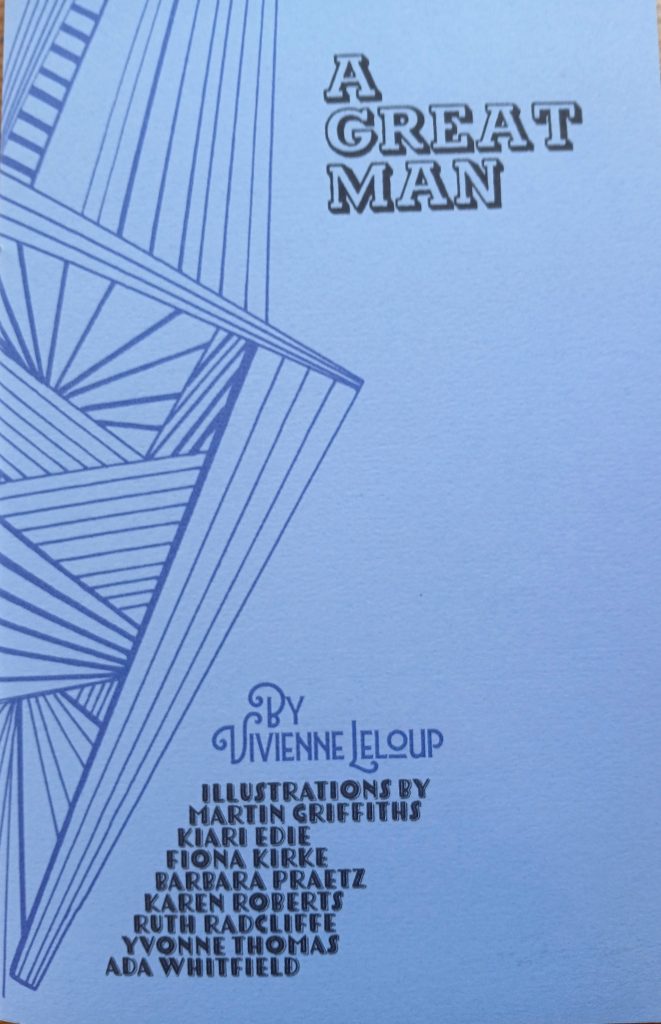
It’s 1927, and the streets of Walsall are packed with cheering and flag-waving crowds.
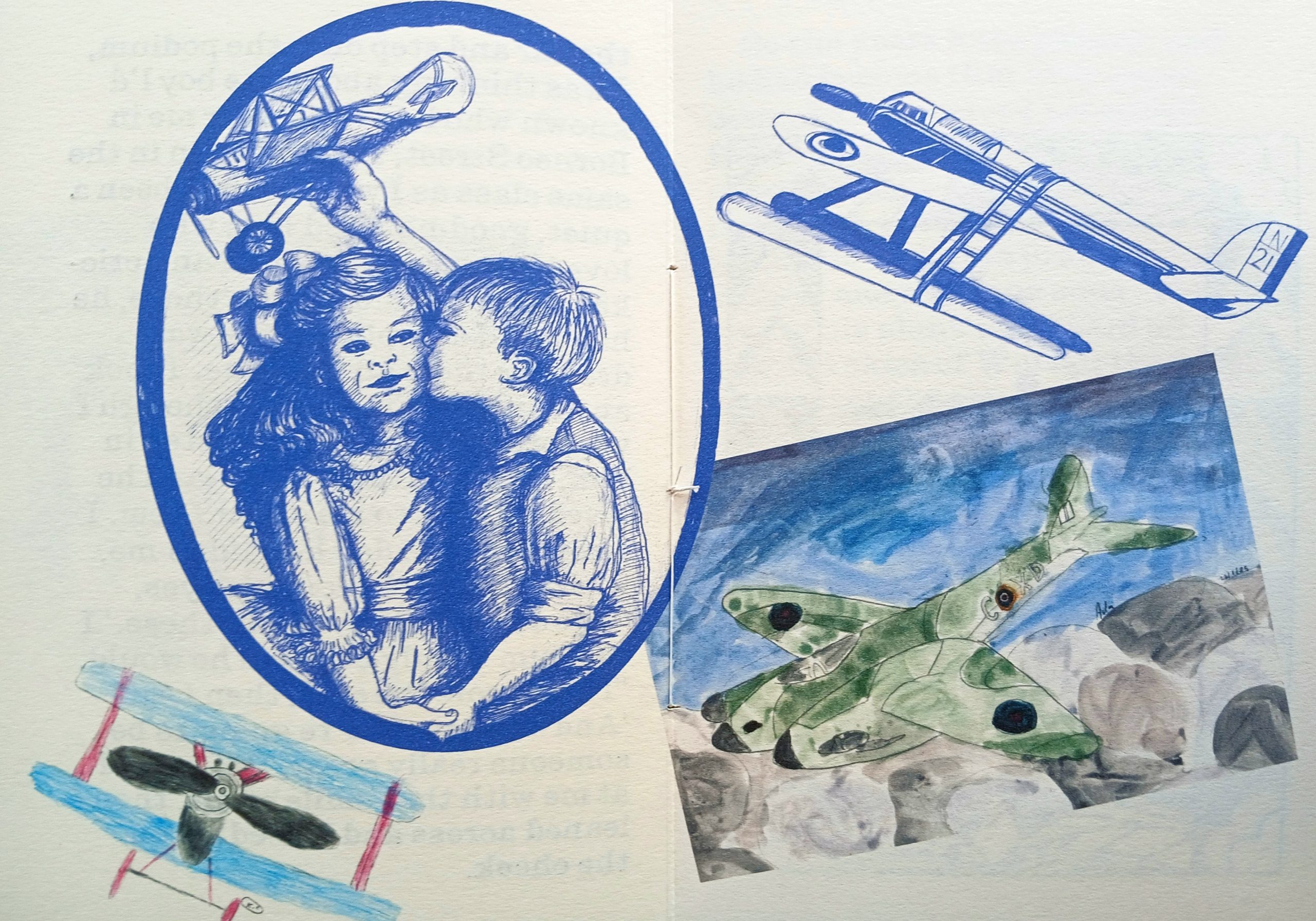
Everyone has turned out to see the triumphant return to his home town of the world-record-beating air-speed pilot, Sidney Webster.
And one young woman in particular is overjoyed to see him, as she stands amongst the crowd and recalls the time he was her secret childhood sweetheart when they were in the same class at Butts Junior School, and wonders if he remembers her, as she so dearly remembers him.
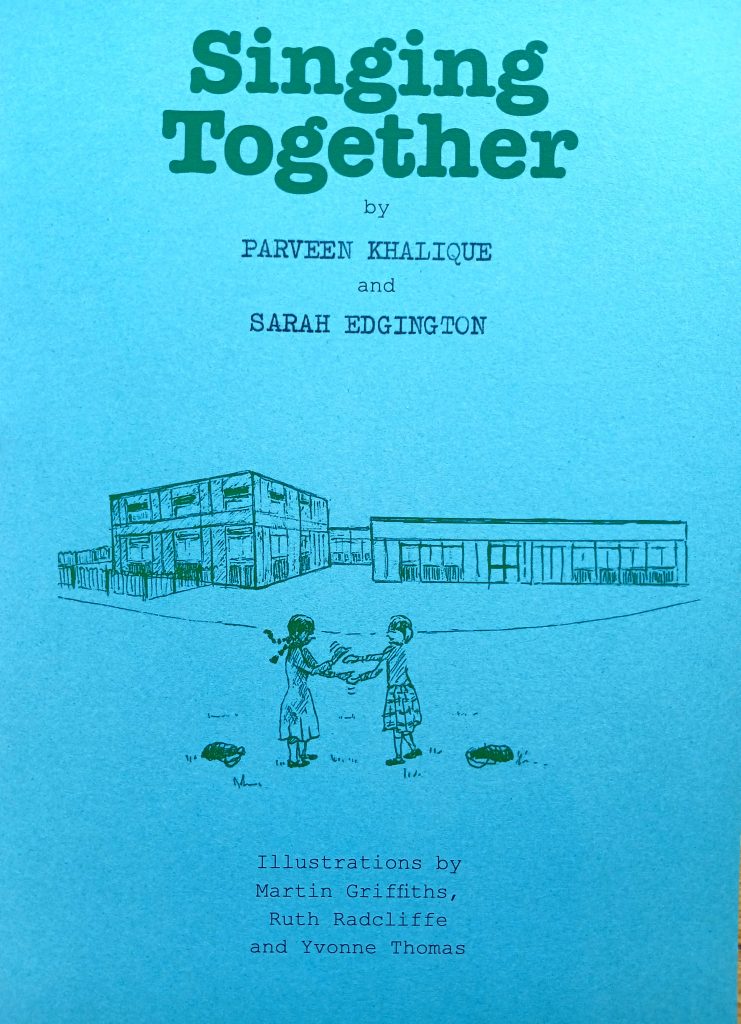
Story 5: Singing Together, by Parveen Khalique and Sarah Edgington
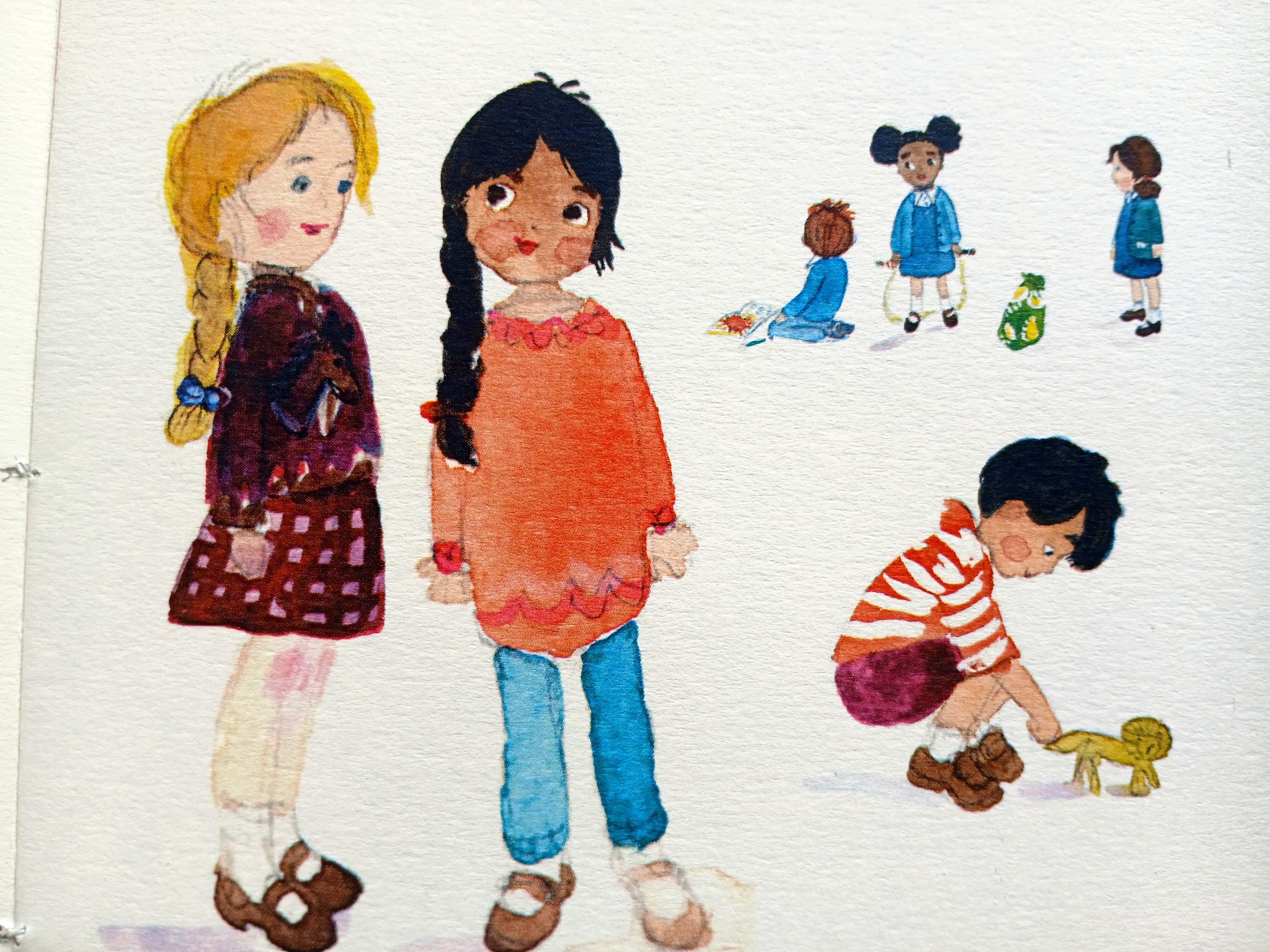
Two girls from very different backgrounds recall the anticipation and excitement as they approach their first day at the newly-opened Butts Primary School in 1975. And, as that day dawns and children and parents gather in the playground, how they discover together a new and lasting friendship.
The two linked pieces by Sarah and Parveen are based for the most part on interviews carried out by the writers with local residents, and together make for a tender story of childhood in a time of cultural and social change.
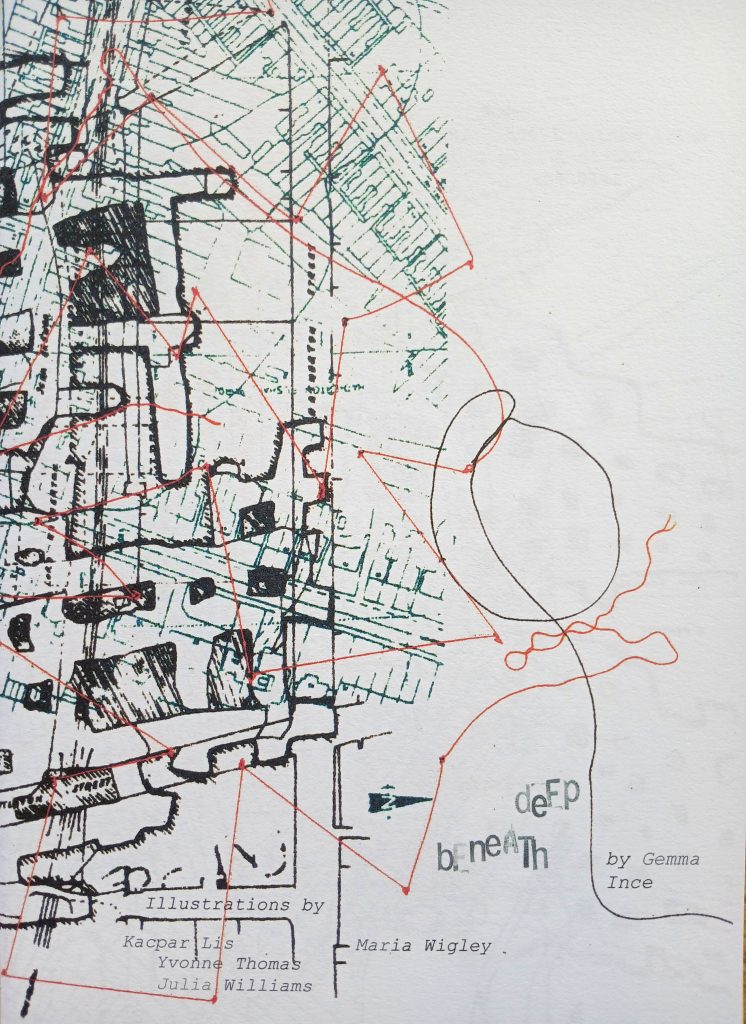
Story 6: Deep Beneath, by Gemma Ince
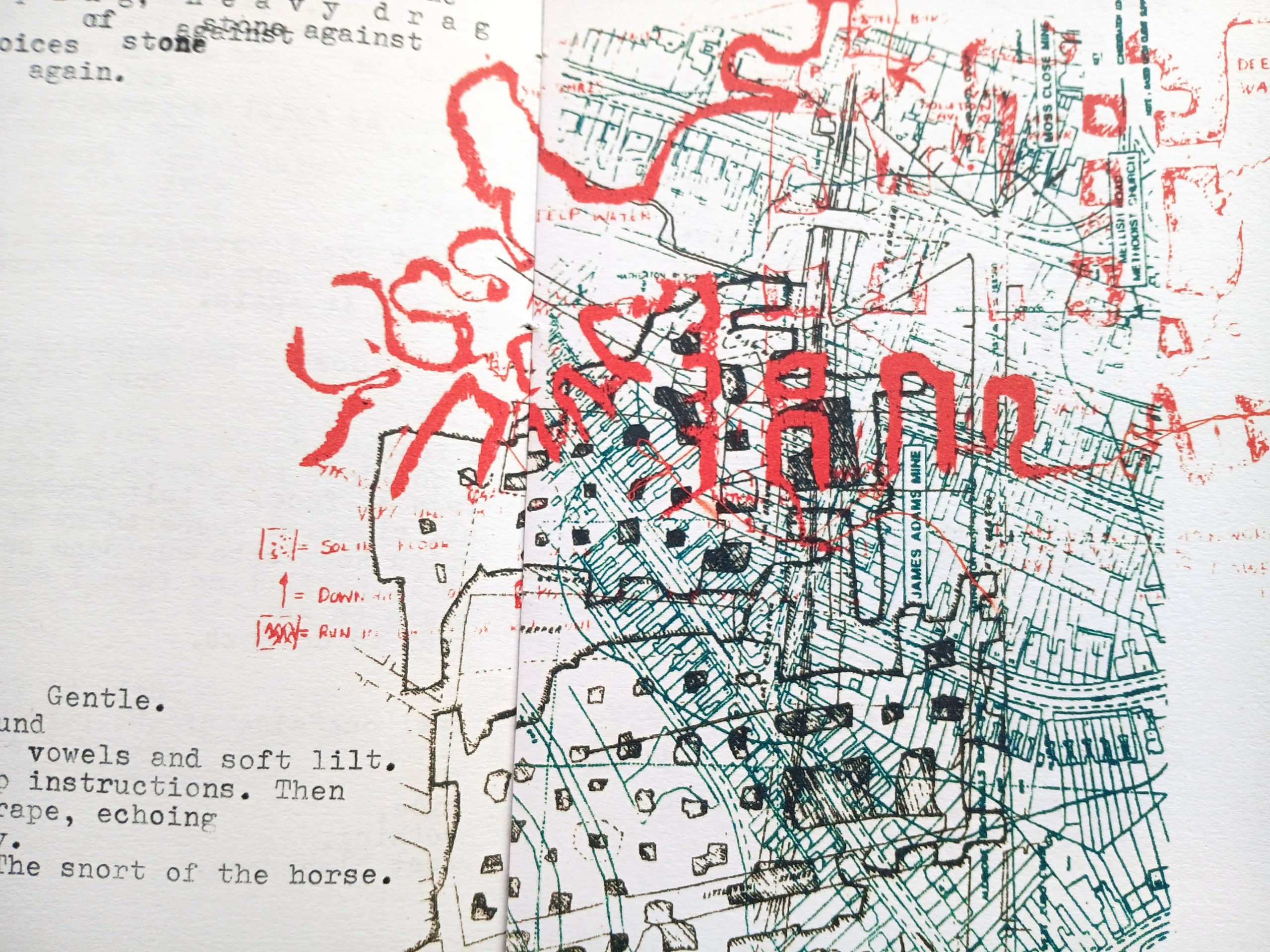
A woman finds a hole has appeared in her back garden, and when she goes to explore, finds herself plunging down into the caverns and tunnels that lie beneath the Butts. There in the darkness, she discovers a world of lost mines and forgotten men – those who once worked the limestone mines, and whose spirits still speak and sing.
Gemma’s story is based in part on research into old maps of the limestone caverns, in part on interviews carried out with Butts residents, and takes us on a journey into the history that lies beneath our feet, and the ghosts that still haunt our deepest memories.
Hand making the Chapbooks
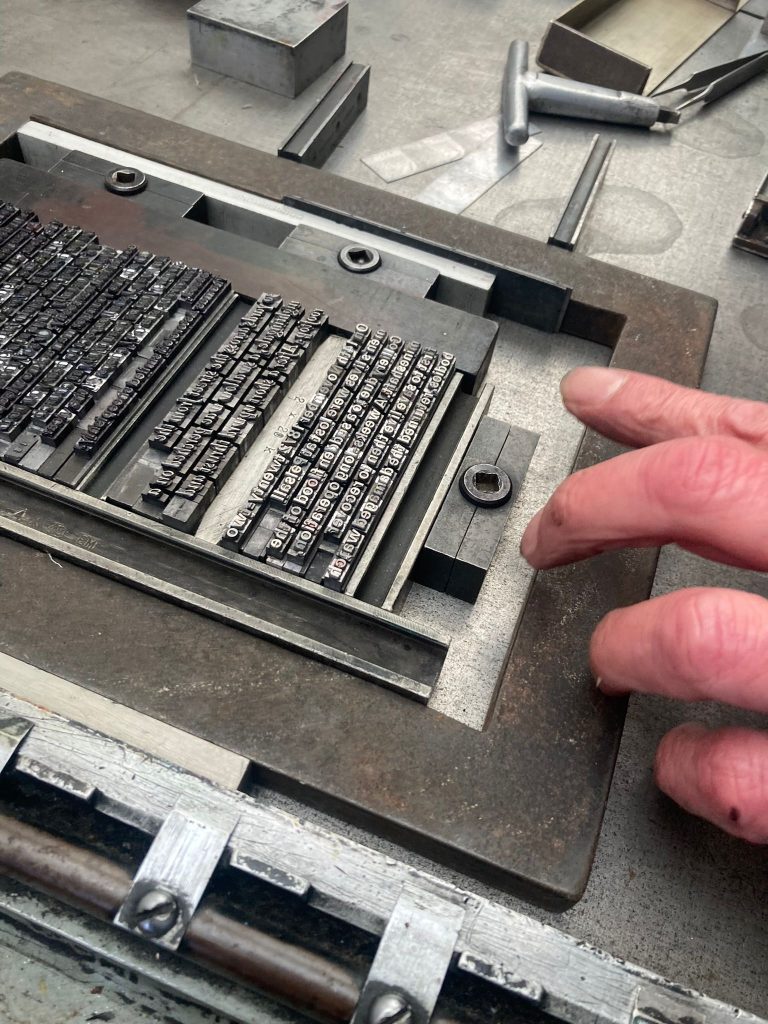
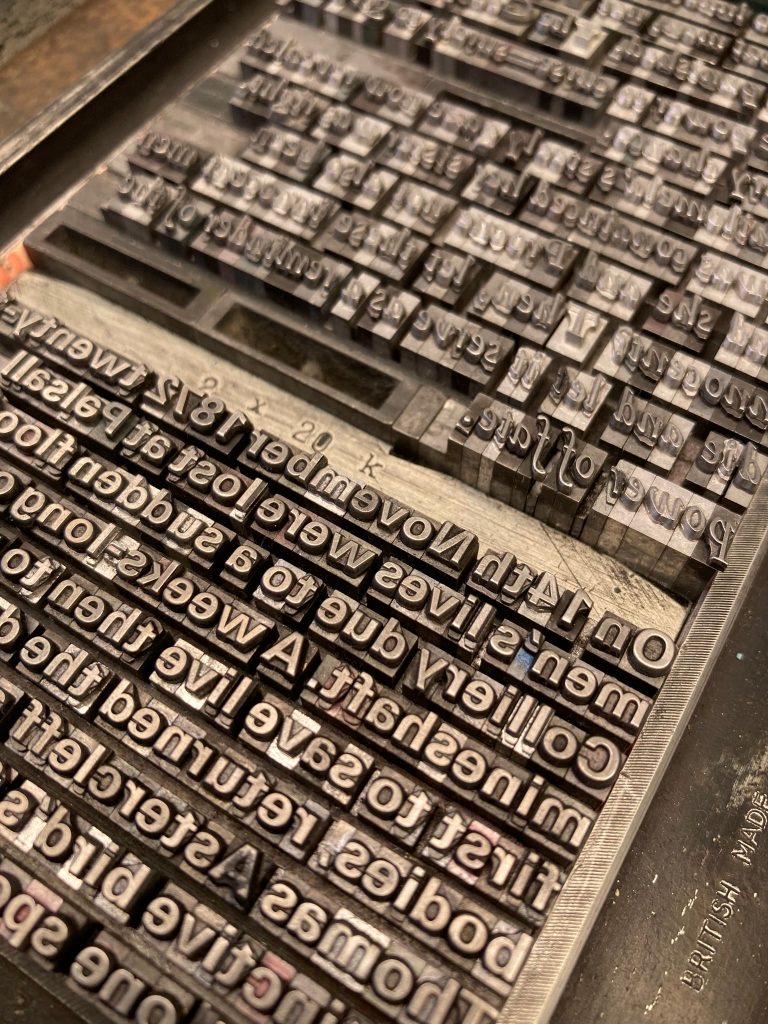
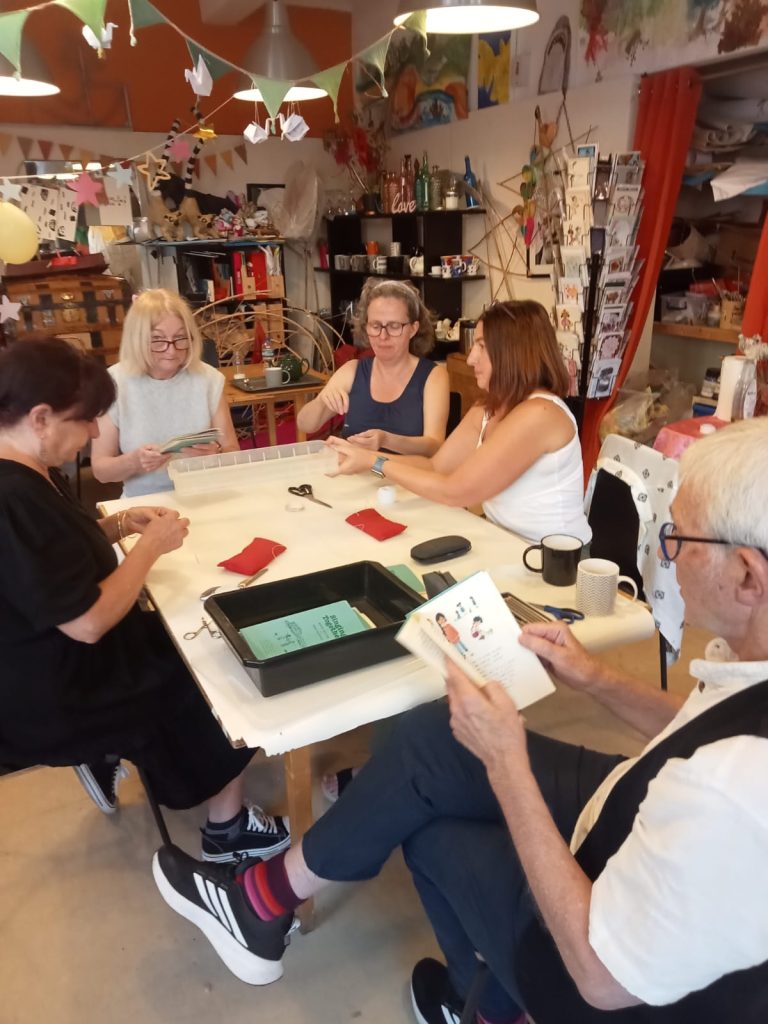
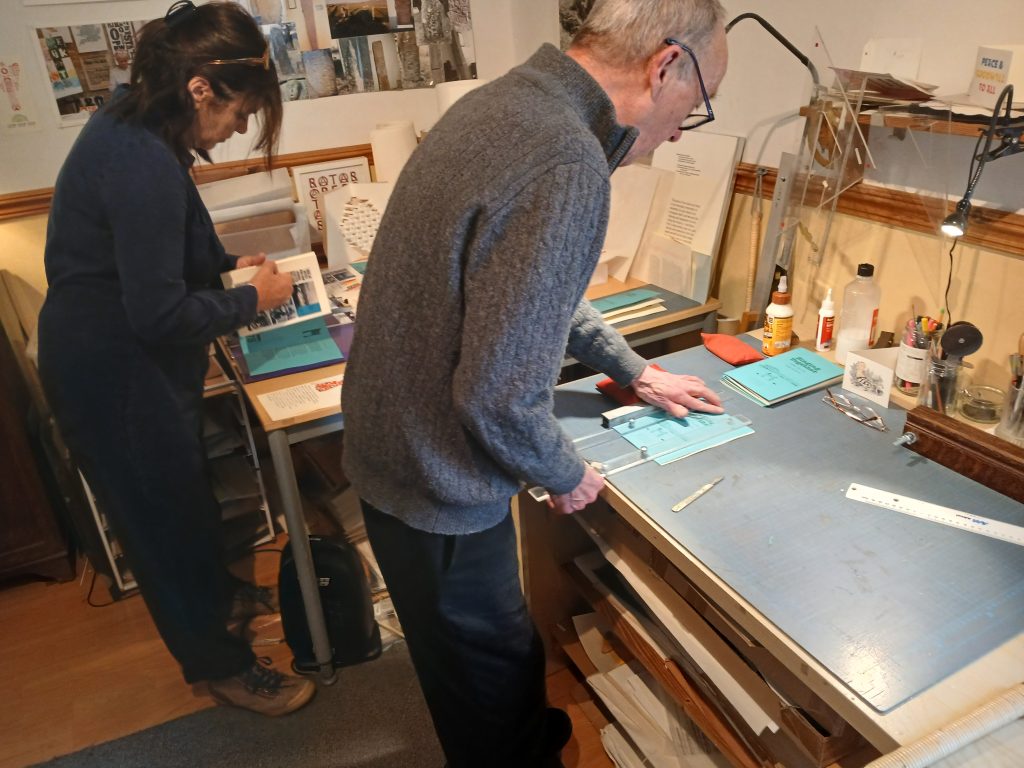
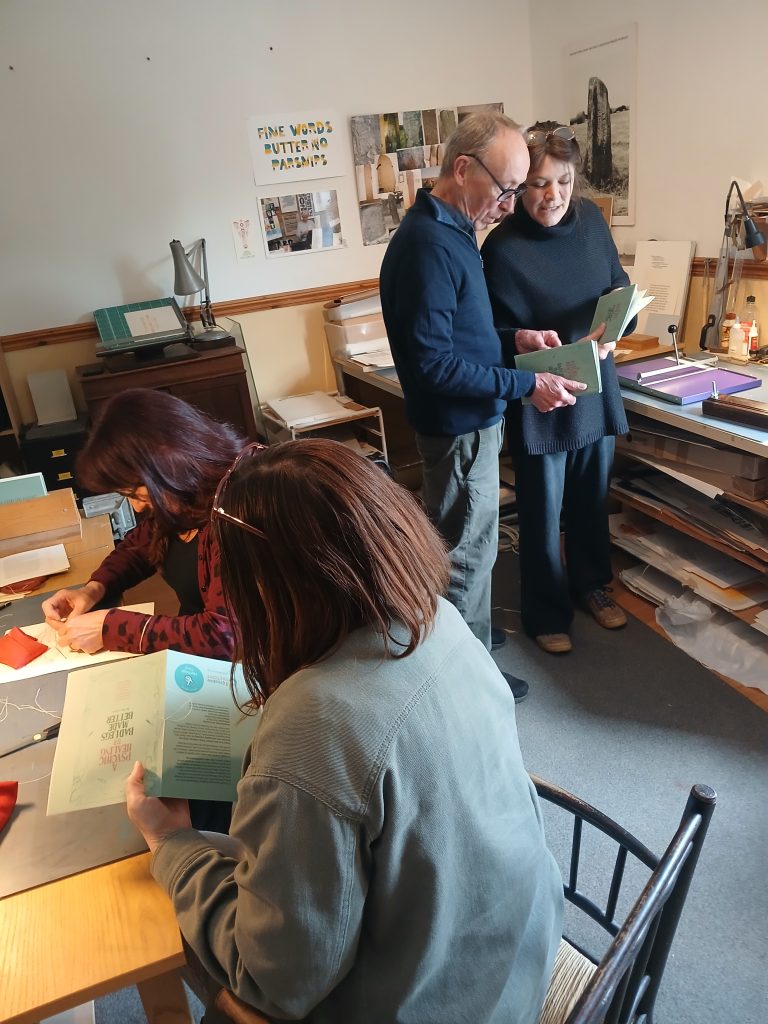
All 600 booklets were made over 10 book making sessions. Peter Cartwright instructed and supervised the sessions to ensure we kept up the quality.
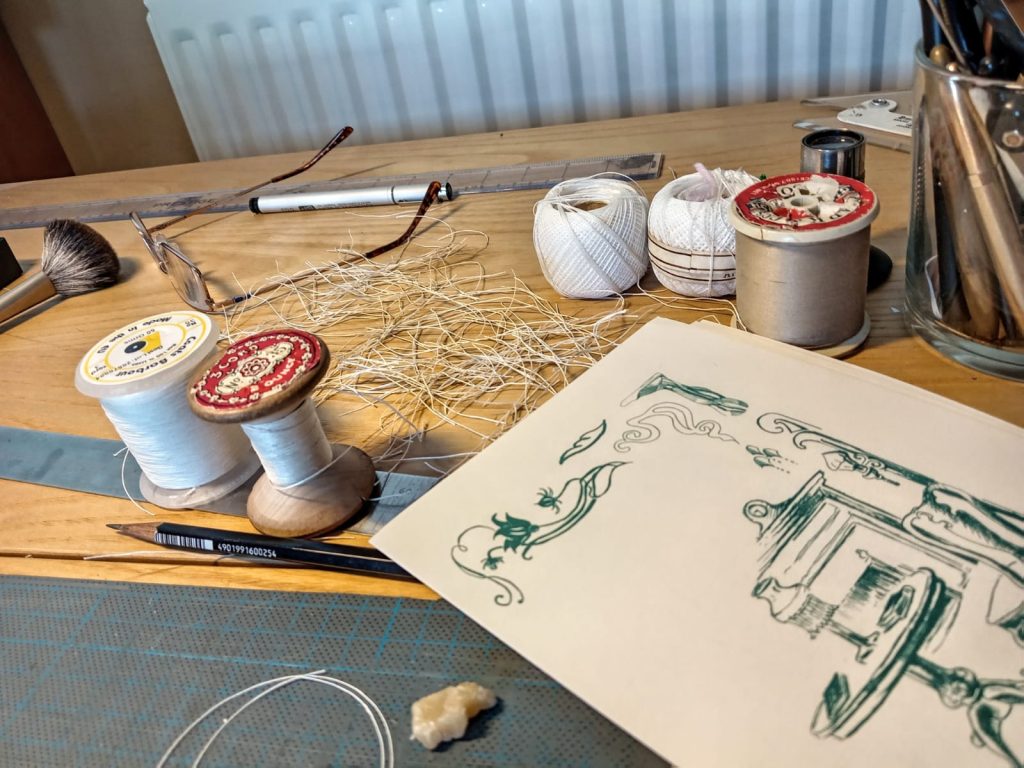
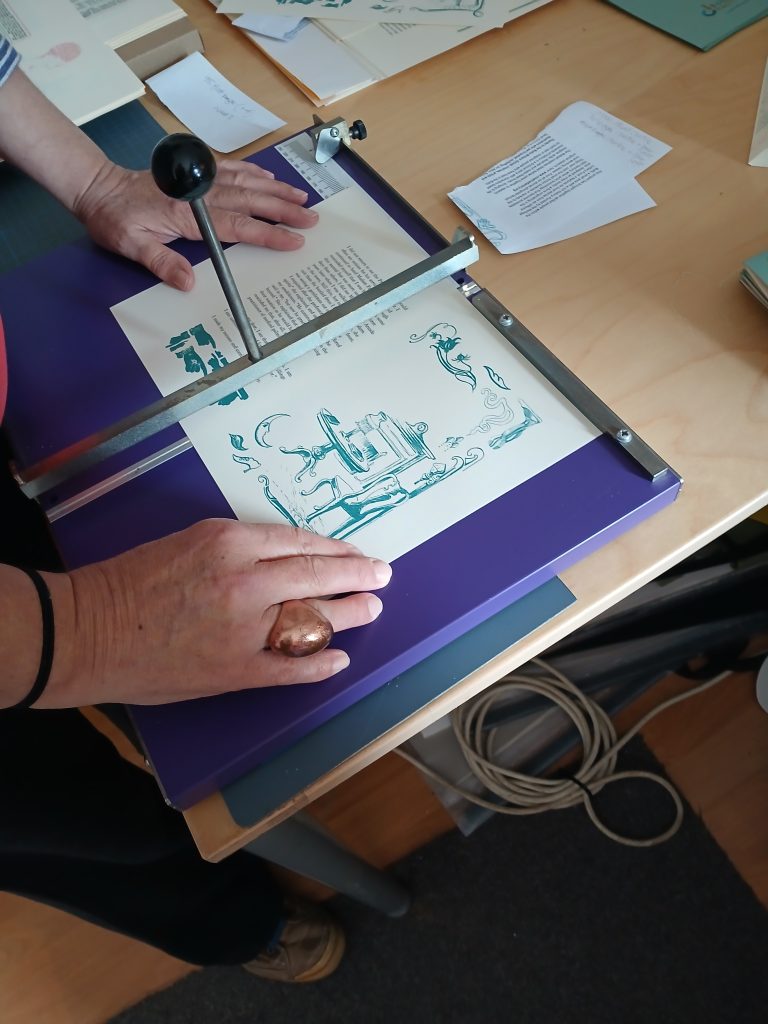
The contents for each chapbook were a collaboration between graphic designer Gemma Ince and Peter, who set type and letter pressed many of the typed sections. Gemma added scanned-in and printed illustrations to the paginated pages. Each book was 3 or 4 printed sections which, assembled and folded in the right order, made 12- or 16-page booklets.
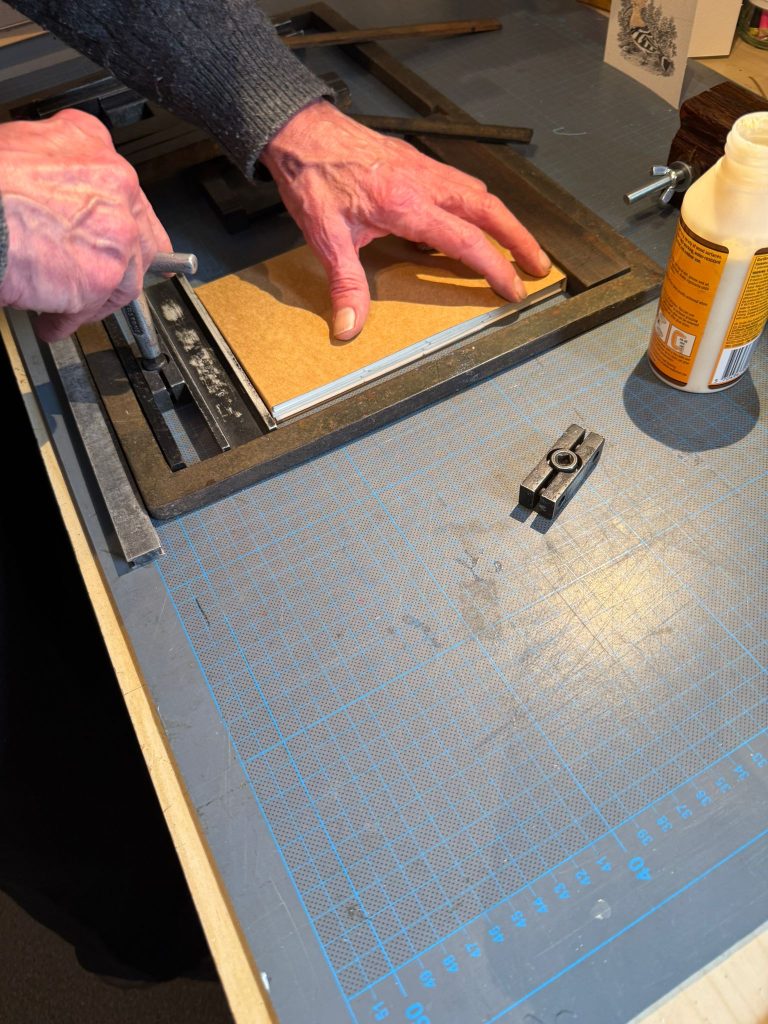
Once the page order was established and any adjustments made for everything to line up, each page was creased on the folding press then a bone was used to sharpen the crease.
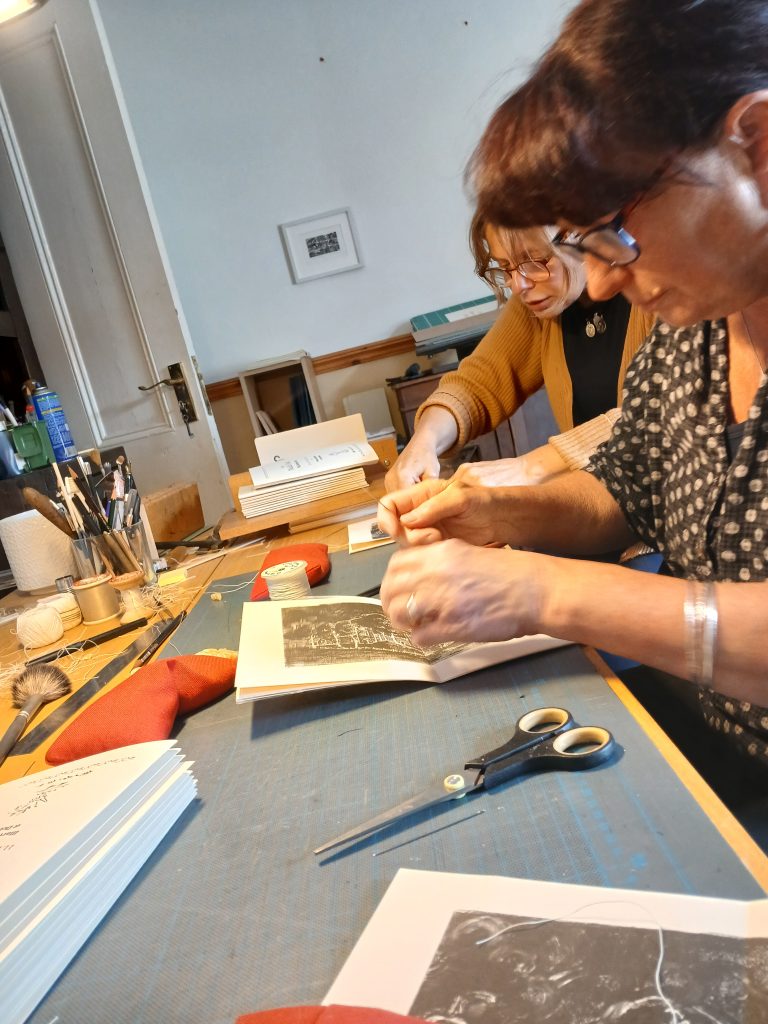
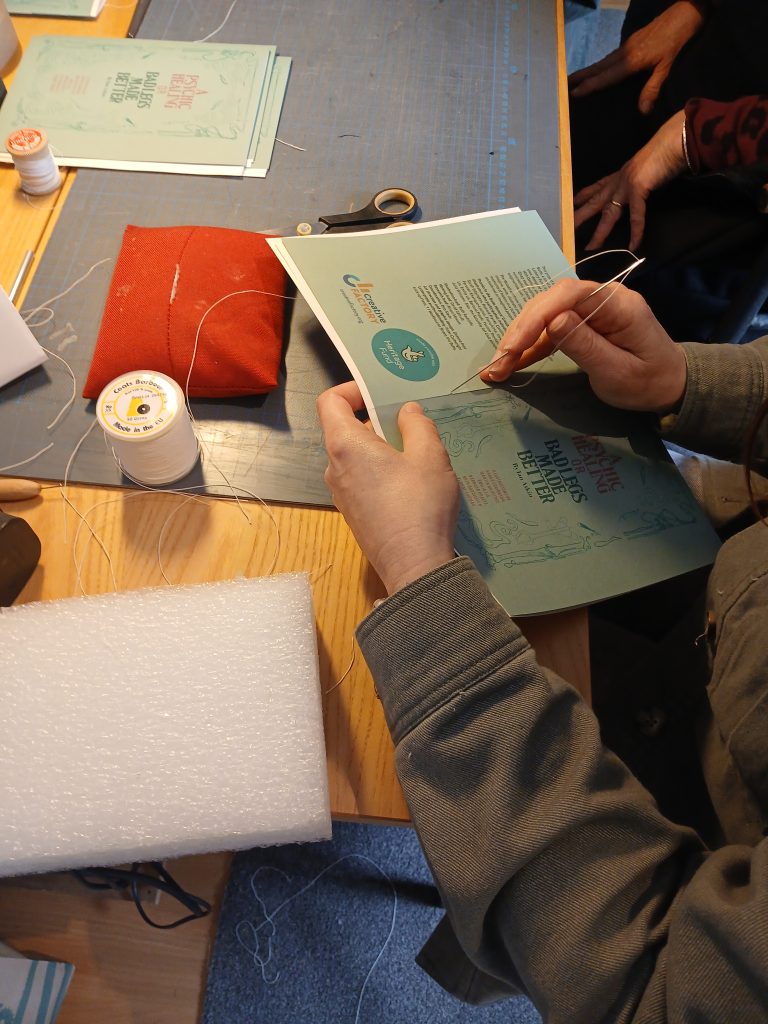
Next each complete booklet was collated and put in a brace for tiny holes to be cut along the creased edge with a Japanese saw, then reassembled inside each other in the correct order ready for hand sewing.
Finally the stitched booklets were clamped again and cropped to their finished size. Lastly the sets of booklets were assembled and a letter pressed slip wrap put around them – this needed measuring, creasing using the folding press and taping.
The 18 participants involved in this process really enjoyed learning how to make booklets as chapbooks would have been made in their heyday. They are also really proud of the high-quality product of the finished result.
The Launch
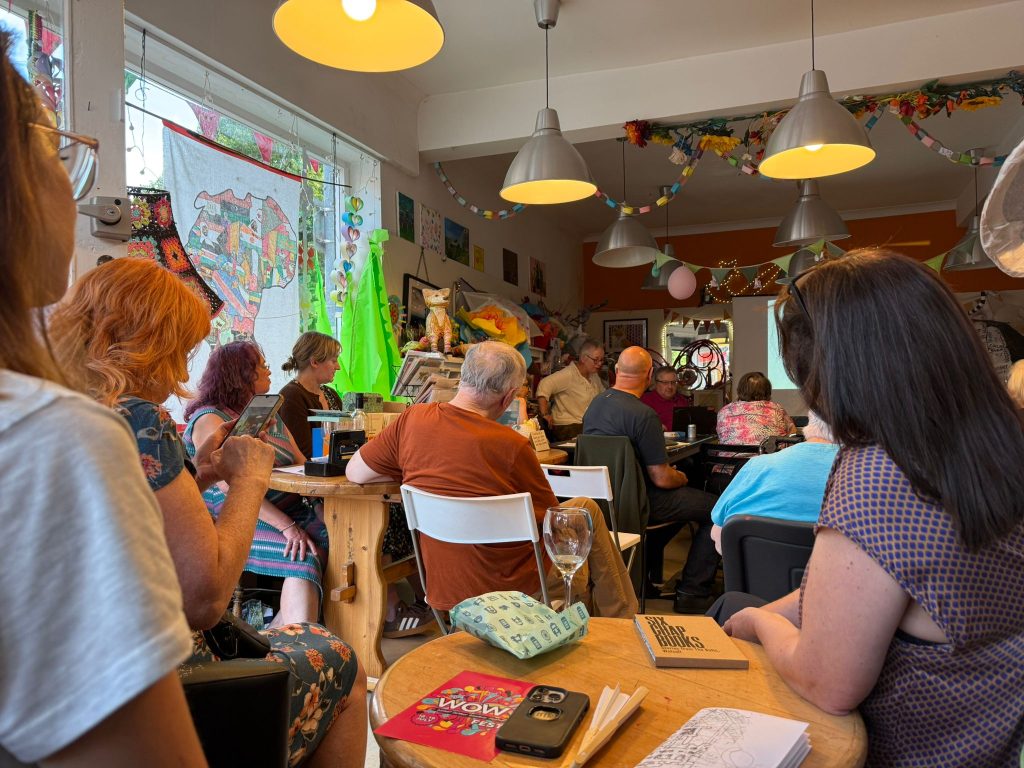
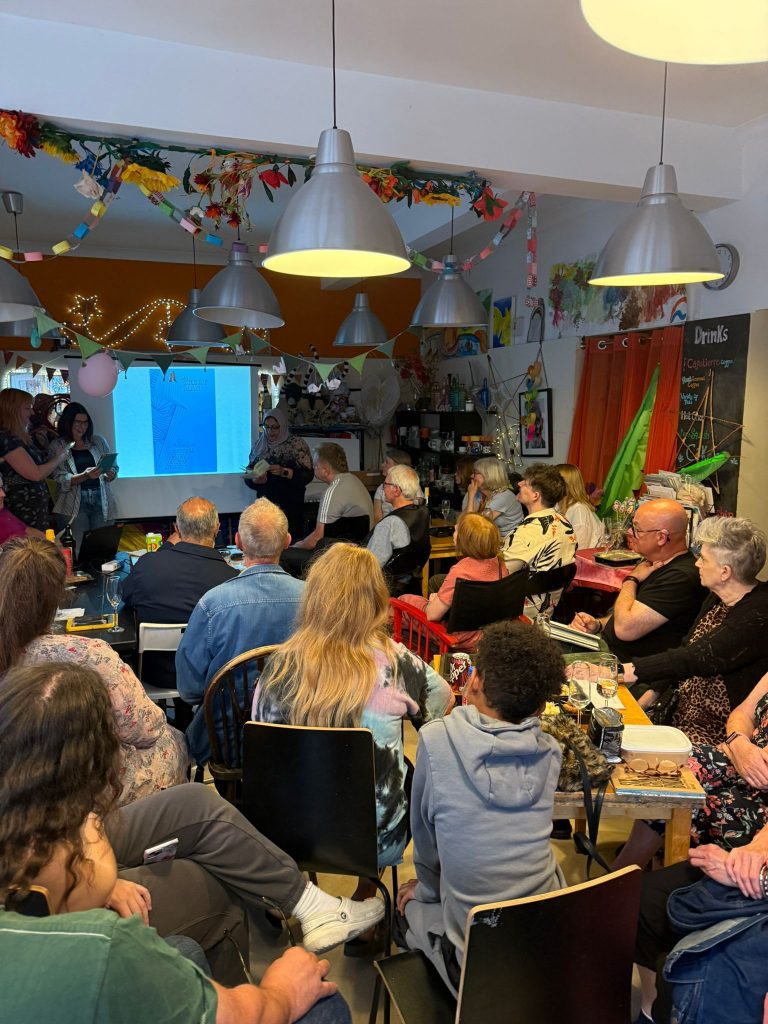
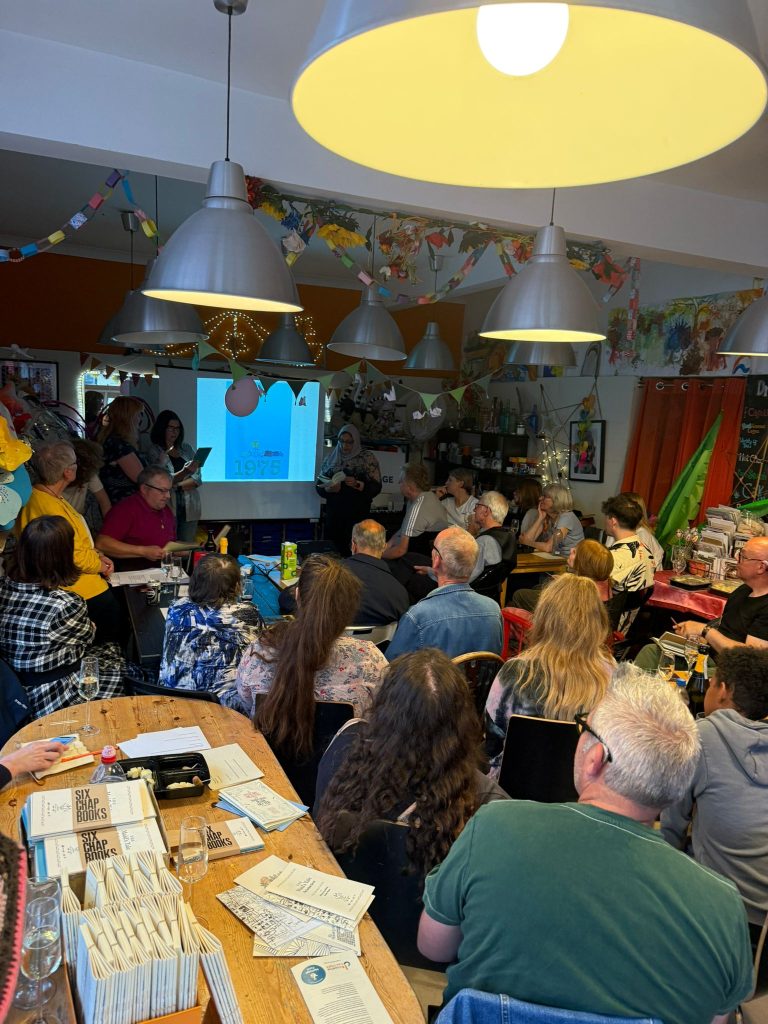
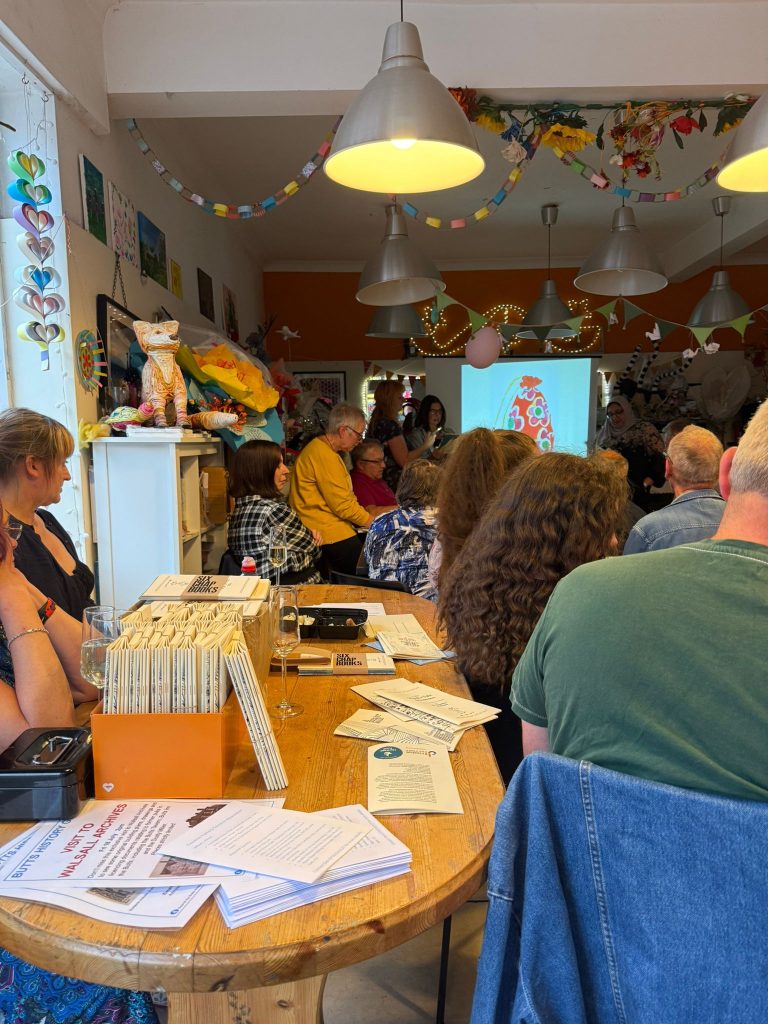
The launch of the chapbooks took place at the Creative Factory on the evening of Friday 4th July 2025. All the writers and illustrators were there, along with family and friends, to celebrate their achievement.
Alison Maxam and Paul Myatt presented a slide show of the historical background behind stories in the chapbooks along with examples of some of the illustrations.
Sharing the Chapbooks
On 9th July, a presentation was made to Butts Primary School of class sets of each of the chapbooks for the school to use in future projects with the children. A simplified version of the slide-show was shown to the assembled children, and the writers introduced themselves. This was followed by a question-and-answer session with the writers for children from the Year 5 class.
On 17th July, the slide-show and readings were presented to the Butts Local History Group at the Creative Factory.
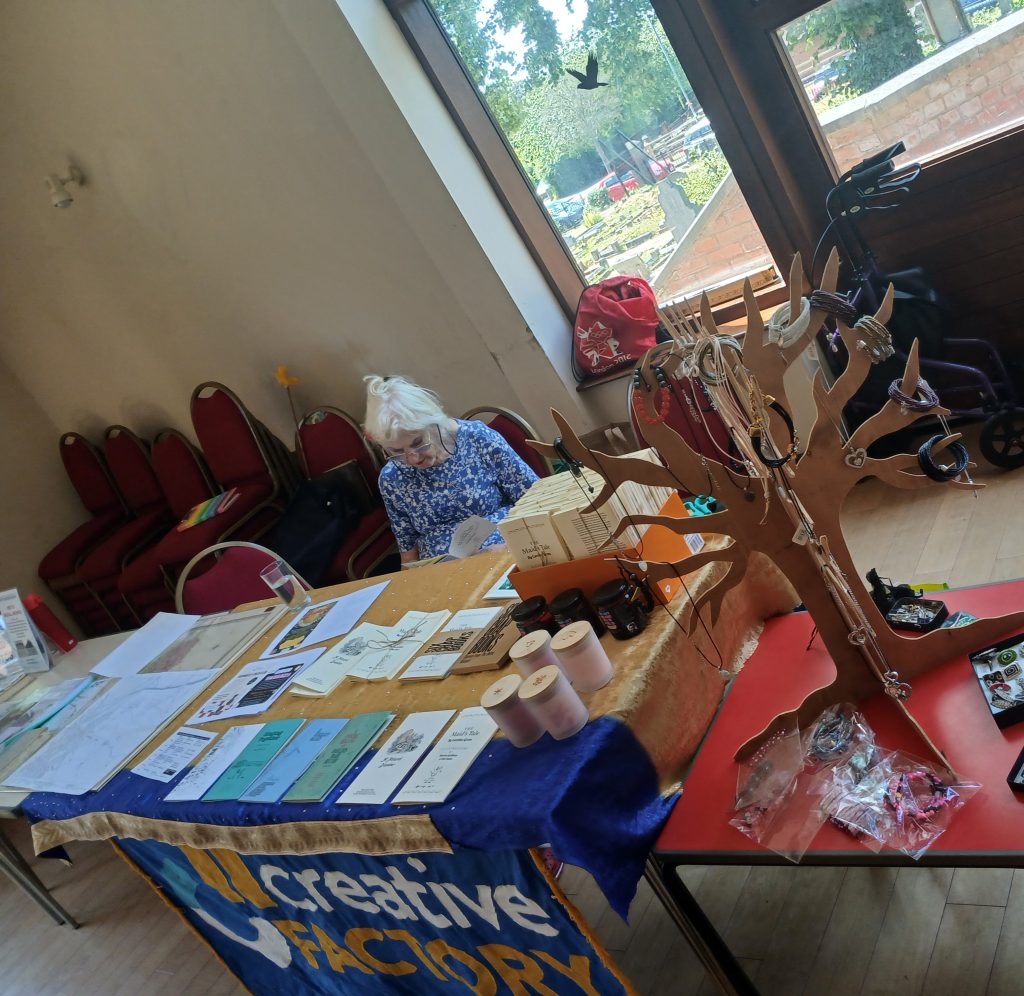
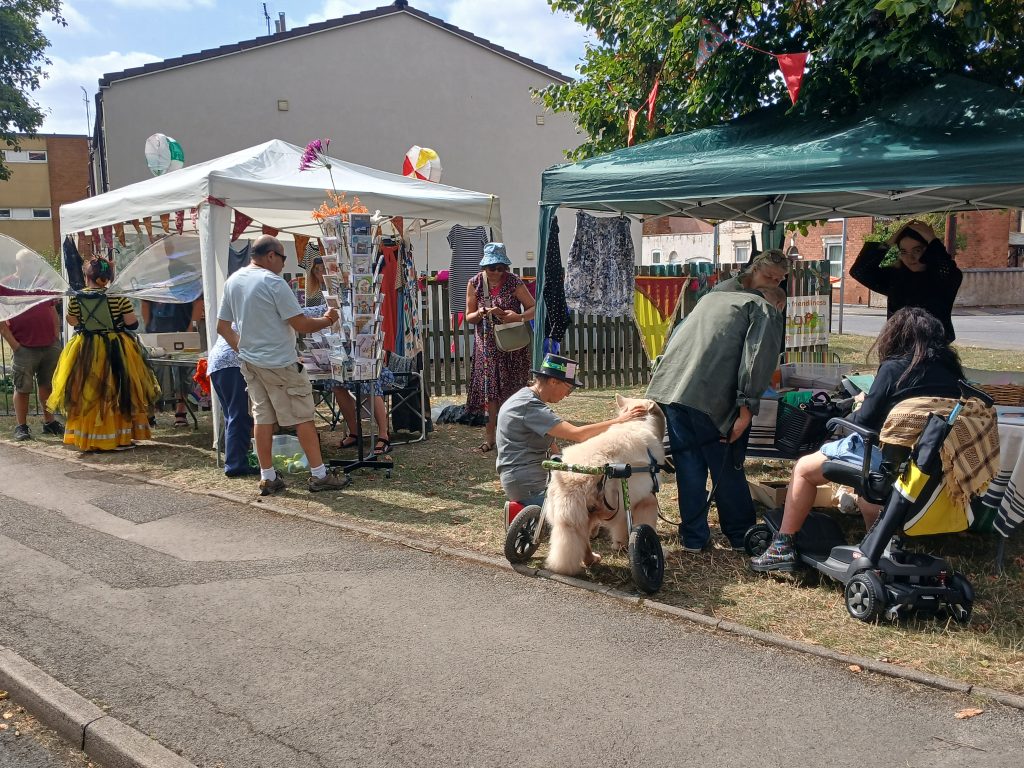
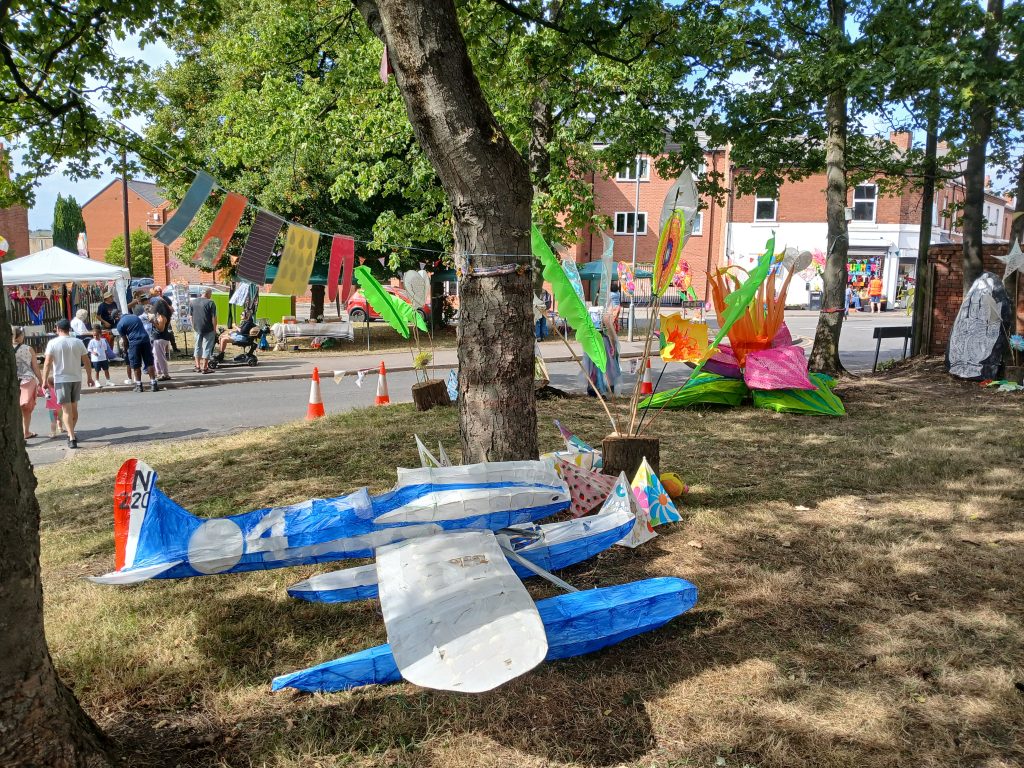
Large lanterns were made of an image from each of the chapbooks which helped to promote the project at a lantern Festival in December 2024 at Borneo Street Allotments, at a Summer Garden Party in the Butts Community Garden in August along with a stall with the chapbooks and again at Walsall Makers Fest on Sept 13th.
The chapbooks had a stall at St Michael’s Church Spring Fair and at Walsall local History Fair. They will finally appear at Christmas markets at The New Art Gallery Walsall and Walsall Makerfest Christmas event on 29th November 2025.
Copies of the Chapbooks are available at Walsall Creative Factory.
Please contact: [email protected] for further details.